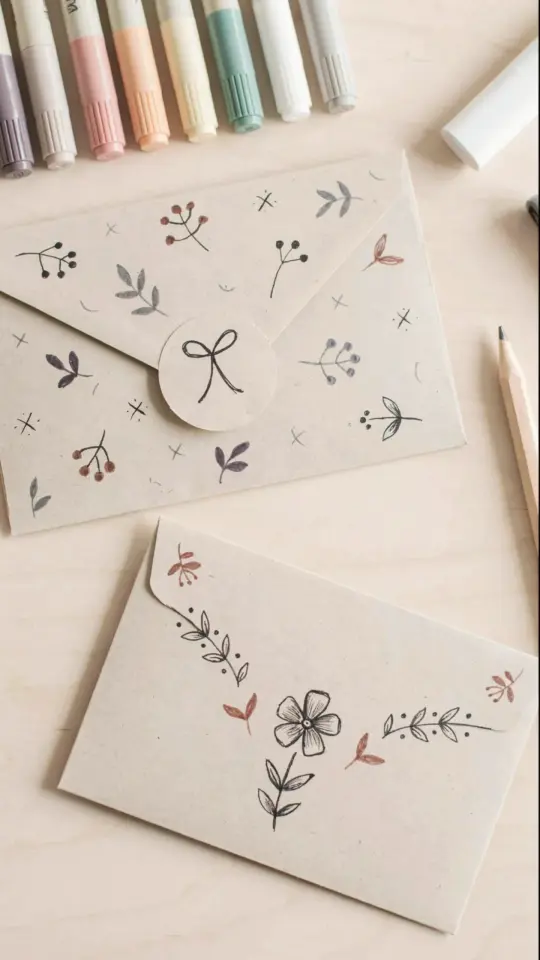
If you’ve ever wanted to try doodle designs for beginners but felt intimidated because you can’t draw a straight line, you’re in the right place. I’ve been there, staring at a blank page, convinced I needed some secret talent. But here’s the truth: doodling is about letting your hand wander, not about perfection. The whole point is to relax, not to impress anyone. You don’t need fancy skills, you just need a willingness to make a few marks and see where they go. Let me show you how I started, and how you can too.
What You Actually Need to Start Doodling Today
You might think you need a special sketchbook and expensive pens. Nope. Grab any piece of paper, even a scrap or the back of an envelope. A normal ballpoint pen, a pencil, or even a marker will work. I’ve doodled on receipts and napkins. The barrier is lower than you think.
- Paper: printer paper, notebook, sticky notes. Anything flat.
- Pen: any pen that won’t smudge badly. I prefer a fine-tip black pen for crisp lines, but a pencil is great if you want to erase.
- Optional: a small sketchbook dedicated to doodles. It’s motivating to have a book fill up fast.
That’s it. No erasers, no rulers, no fancy watercolors. Keep it simple so you actually start instead of shopping for supplies.
The First Doodle Design That Always Works
When you’re brand new, the easiest doodle design is a pattern made from repeating shapes. Start with a simple circle, square, or line. Then add another one next to it. Keep going. Before you know it, you have a rhythm. Here’s my go‑to first exercise:
Draw a small dot anywhere on your paper. Around it, draw a slightly bigger circle. Then draw another circle around that one, but this time add tiny spikes (like a sun). Keep adding layers. This is called a zentangle‑inspired border. It looks complicated, but it’s just one shape repeated and varied. Trust me, it works every time.
How to Build a Relaxing Doodle Session
Relaxing doodles shouldn’t feel like homework. Set a timer for five or ten minutes. Put on music without lyrics, or sit in silence. The goal is to let your hand move without your brain editing every line. If you mess up, let it be part of the design. I’ve turned many “mistakes” into intentional looking patterns by just drawing over the error with a few extra lines.
Don’t be afraid to fill the whole page. Sometimes the most satisfying doodles are ones where the shapes overlap and create texture. That’s the beauty of beginner drawing: you can’t do it wrong, because there’s no right.
Five Simple Patterns to Fill Your Sketchbook
These sketchbook ideas for beginners are my personal top five. They repeat, they’re forgiving, and they look really neat when you see them all together.
- Checkerboard dots: Draw a grid of light pencil lines, then fill alternate squares with dots. The contrast looks clean and modern.
- Wavy lines and hills: Draw a wavy line from one edge of the page to the other. Then add a parallel wavy line below it, then another. It looks like rolling hills or waves. Add tiny circles or dashes in the valleys for extra texture.
- Leaf or petal clusters: Draw a small circle, then draw three or four petal shapes around it. Repeat nearby. Vary the sizes. It looks organic and satisfying.
- Spiral stacks: Draw a small spiral, then draw a larger one next to it. Then an even larger one. They can overlap. It feels like a calming, repetitive meditation.
- Triangle tessellations: Draw a horizontal line, then a zigzag on top to create a row of triangles. Fill every other triangle with a pattern like stripes or dots. This one feels mathematical but very easy once you start.
Try doing a page full of just one of these patterns. You’ll be surprised how quickly you get into a flow state.
What to Do When You Feel Stuck
Every doodler hits a
#doodledesigns #doodleart #beginnerdrawing #relaxingdoodles #sketchbookideas
Leave a Comment